
What to Wear for Your Professional Headshots: A Guide for Men
Booking a professional headshot session is a smart investment in how you show up online — but for a lot of guys, the first reaction after scheduling is standing in the closet thinking, "Do I just… wear a suit?"
The answer is likely yes, but the details matter more than you might think. As a headshot photographer, I have seen great suits photograph terribly and simple outfits look incredibly sharp on camera. The difference almost always comes down to a few specific choices. Here is what I recommend for any man walking into a professional headshot session.
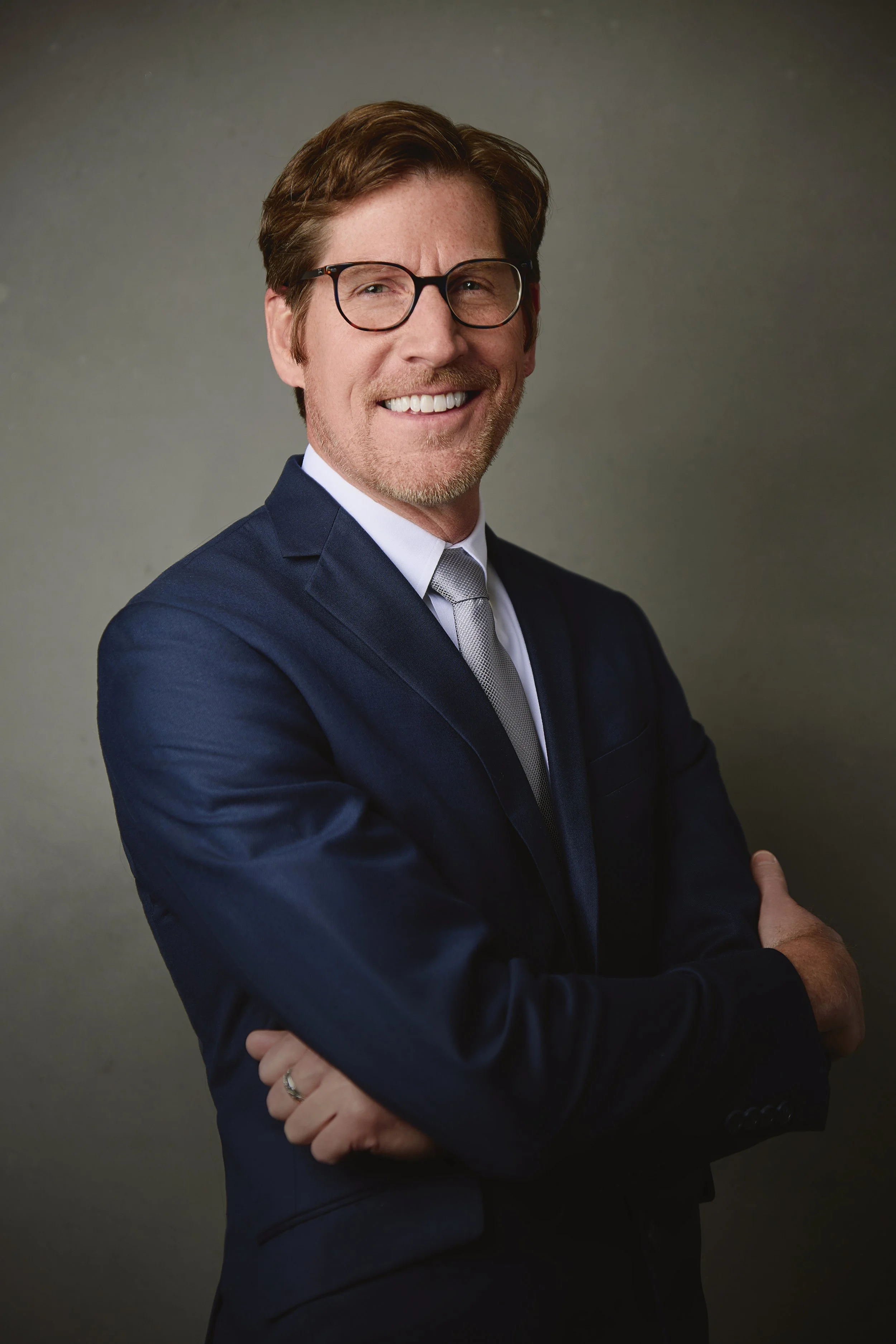
1. YOUR SUIT: COLOR AND FIT ARE EVERYTHING
Your suit is the foundation of the entire image, and two things determine whether it works on camera: color and fit.
For color, stick to classic dark neutrals.
Navy, charcoal, and dark grey are your strongest options. They read as polished and professional without competing with your face for attention.
Avoid pure black if you can. Black tends to flatten under studio lighting and loses all of its texture and detail in the final image.
Light grey and tan are tricky. Depending on your skin tone and the background we use, lighter suits can wash out or compete with the backdrop. If you love a lighter suit, bring it as a second option rather than your primary choice.
For fit, no color choice in the world will save a suit that doesn't sit right on your body. A jacket that pulls across the shoulders or a shirt collar that gaps will catch the camera's attention every time. If your suit hasn't been worn in a while, try it on before shoot day and make sure it still works.

2. WHEN A SUIT ISN'T THE RIGHT CALL
A suit is the gold standard for legal, financial, and executive headshots but it is not the right choice for everyone. If you show up to work every day in a button-down and chinos, a company polo, or even a well-fitted t-shirt, a three-piece suit in your headshot is going to create a disconnect. The goal of a great headshot is to show the best, most polished version of how you actually present yourself professionally, not a costume of “professionalism”.
Here are a few situations where dialing back from a full suit makes sense:
You work in a casual industry. Tech, creative fields, real estate, construction, and trades are all industries where a suit can read as stiff or out of character. A sharp blazer over a clean solid shirt can hit the right note — professional and put-together without feeling overdressed and so can a nice structured but less formal button down shirt.
Your brand is built on approachability. Coaches, consultants, educators, and healthcare professionals often want to signal warmth and accessibility before anything else. A blazer, a neat sweater, or a well-fitted button-down open at the collar can communicate exactly that.
Your company has a defined casual culture. If your organization has a clear identity built around being non-traditional, a headshot that looks like it belongs on a bank's "meet the team" page might actually work against your brand.
WHAT SHOULD YOU WEAR INSTEAD?
The same core rules still apply: solid colors, good fit, clean and wrinkle-free. The main shift is just the formality level.
A blazer without a tie over a solid dress shirt is a reliable middle ground for almost any context that isn't strictly formal. A well-fitted quarter-zip, a clean crewneck in a dark neutral, or even a quality solid-colored t-shirt can all work depending on your industry and what you want your image to say.
When in doubt, ask yourself: what do I wear on a day when I am meeting someone important for the first time? That is usually your answer.

3. TO TIE OR NOT TO TIE
This is genuinely a matter of personal preference and professional context, and there is no wrong answer. A tie communicates a certain level of formality; an open collar reads as modern and approachable. Both can look excellent so the right choice truly varies depending on what you are trying to communicate to the image’s viewer. What is the right choice for an attorney might be worlds different from the right choice for a Project Manager for a construction company.
If you do wear a tie:
Solid colors are always safe. A classic solid navy, burgundy, or grey tie is hard to get wrong.
Avoid tight patterns. Thin stripes, micro-dots, and small repeating designs can cause moiré (the same visual vibration I describe in my general headshot style guide) and it will show up in your photos.
The rule of thumb is the same as with any pattern: bold and simple rather than small and busy.
If you are on the fence, bring both options and we can look at them together when you arrive.
4. THE SHIRT UNDERNEATH: DON'T OVERLOOK IT
The dress shirt is easy to overlook when the suit is doing most of the visual work, but it matters.
Solid colors are your best bet. A medium blue, soft white, or light grey shirt pairs cleanly with most suit colors and backgrounds.
Be cautious with bright white. Against certain backgrounds or with certain lighting setups, a very bright white shirt can blow out in the frame — meaning it becomes a distracting patch of light rather than a clean, crisp collar. If white is your go-to, bring a backup in a softer tone just in case.
The same clothing prep rules apply here: freshly laundered, ironed or steamed, free of stains and lint. The camera will find every wrinkle.

5. GROOMING: THE DETAIL Many MEN FORGET
Here is a tip that might save you from a frustrating reshoot: get your haircut 3–5 days before your session, not the day of.
A fresh cut right off the chair can look a little stark or sharp around the edges in a way that is hard to put your finger on. A few days of settling gives your hair time to return to its natural shape and look like you at your best, rather than you fresh out of the barber's chair.
The same logic applies to facial hair. Whatever your situation — beard, stubble, or clean-shaven — make sure it is at its intended, finished state when you arrive. A headshot freezes a single moment in time. Make sure it is the version of you that you actually want representing you.
6. WHEN IN DOUBT, BRING OPTIONS
This advice holds for everyone, but it is especially useful for men who tend to underestimate how much a small change can shift a photo. Pack a garment bag with a couple of shirt options, a second tie (or no tie as an alternative), and if you have a strong feeling about a different blazer or jacket, bring that too.
When you arrive, we can go through your options together and I can tell you exactly how each piece will read on camera and against the background we are working with. Making that call together rather than committing to one outfit at home almost always leads to a result you are happier with.
SUMMARY CHECKLIST FOR YOUR HEADSHOT SESSION
Formality level: Match your outfit to how you actually show up professionally. A blazer and open collar can be just as sharp as a full suit in the right context.
Suit: Navy, charcoal, or dark grey. Well-fitted and tried on before shoot day.
Tie: Optional — solid colors or bold simple patterns only. No tight stripes or micro-patterns.
Shirt: Solid colors. Freshly laundered and ironed. Bring a backup if going with bright white.
Grooming: Haircut 3–5 days before. Facial hair at its final, intentional state.
Variety: Bring a couple of options so we can make the final call together.
Ready to update your image? [Link to booking page] to book your professional headshot session in Colorado!
